For U.S. Roofing Contractors

Roofing accounting and tax strategy that shows you what each roof really made.

Insurance checks that arrive in pieces, commissions, crews paid by the square and a storm season that brings in most of the year’s revenue in a few months: roofing money moves differently. IncSight gives U.S. roofing contractors margin per roof, a cash plan between storm seasons and year-round tax planning from a team of CPAs and IRS Enrolled Agents.

See the Tax Topics
  • Depreciation checks nobody chases
  • Commissions paid on price, not profit
  • Deposits spent on the last job
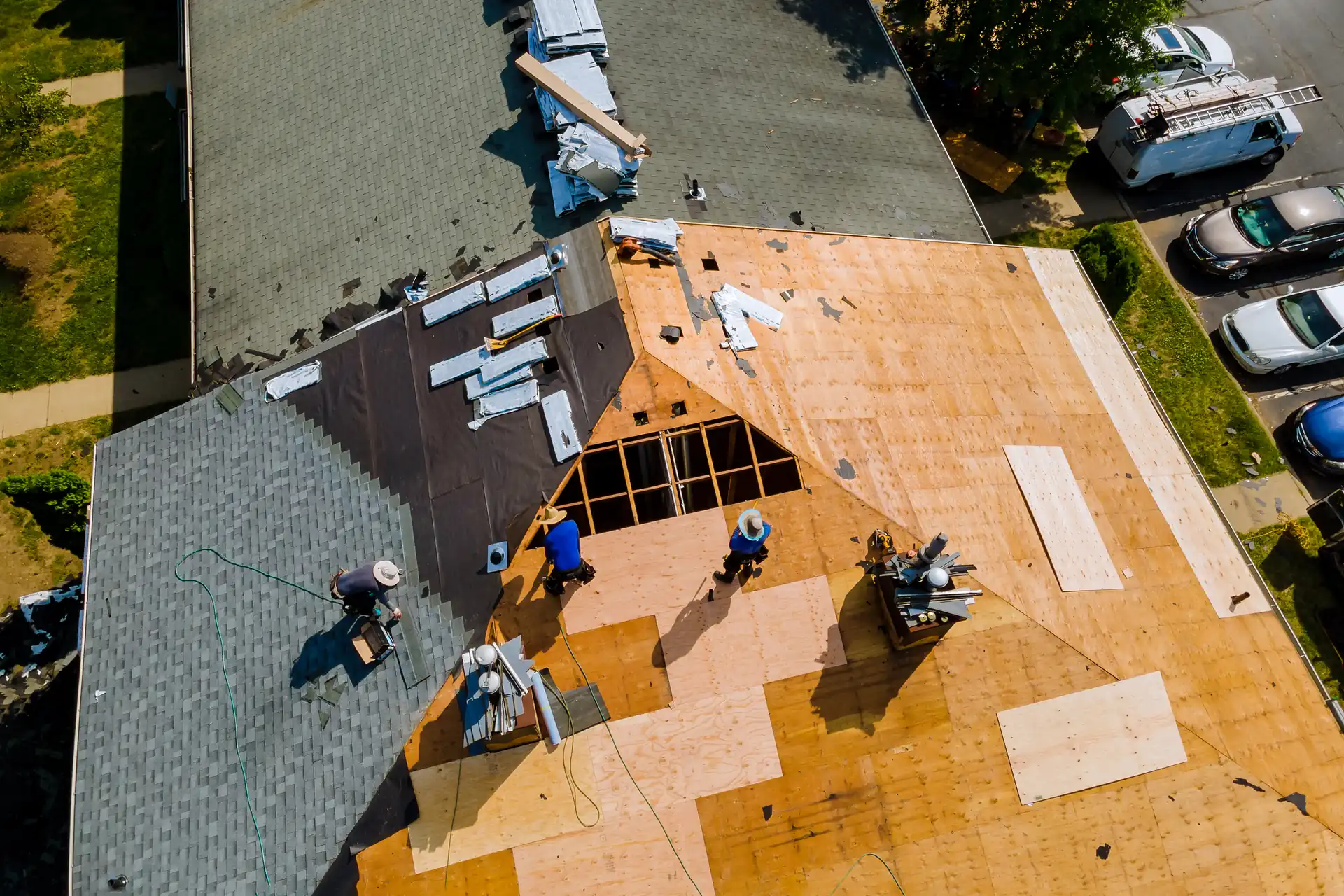
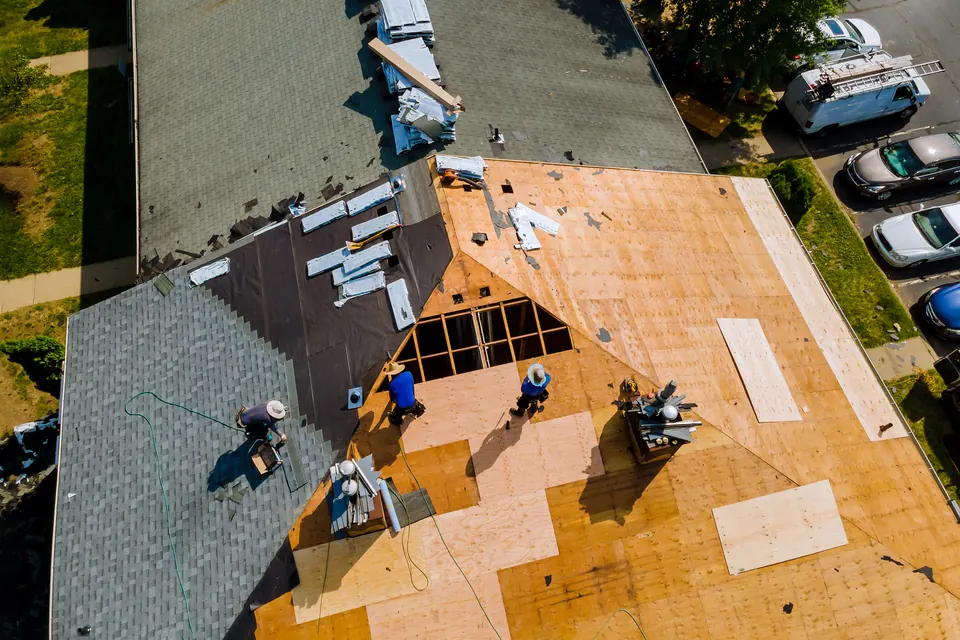
Aerial view of a roofing crew replacing asphalt shingles on the roof of a house
★★★★★“Israel and his team went through all my past transactions, straightened everything out, and got me back on track.”— Russ W., Google review
At a Glance

What does an accountant for roofing contractors do?

An accountant for roofing contractors keeps job-level books that show margin per roof, tracks insurance jobs until the last depreciation and supplement checks are collected, and plans taxes around crews, commissions, equipment and storm-season income. At IncSight, that work is led by Israel Díaz, an IRS Enrolled Agent, and done year-round, not only at filing time. The IncSight team includes CPAs and IRS Enrolled Agents.

  • Margin per square, split by retail, insurance and repair work
  • Every insurance claim tracked until the final check is collected
  • Canvassers, sales reps and crews reviewed for W-2 vs. 1099 and Form 1099-NEC
  • Quarterly estimates planned around storm-season income
Roofing company · Retail vs. insurance work
Gross margin, retail re-roofs
38%
Gross margin, insurance re-roofs (before supplements)
27%
Average days to collect an insurance job
74
Held-back depreciation and supplements still open
$96,500
Commissions already paid on those open jobs
$18,200
What the numbers say

The crews are busy and the roofs are finished, but $96,500 of earned money is still sitting with carriers and homeowners — and the commissions on those same jobs already left the bank.

The figures use sample data. They are not client results.

Where Profit Leaks

Where roofing profit usually leaks.

Roofing leaks rarely show up on a year-end P&L. They show up when you look claim by claim, rep by rep and month by month.

01

Insurance jobs that get paid in pieces

The first check often covers only part of the claim. The held-back depreciation comes after the homeowner sends proof the roof is done, supplements for missed items need their own approval, and some checks need a mortgage company to sign off. If each claim is not tracked as money still owed, the last check is never chased, and a job that looked profitable on paper quietly collects less.

02

Commissions and crew pay that ignore the real cost of the roof

Paying sales reps a share of the contract price rewards closing at any price, and paying crews a flat rate per square hides the extra layers, rotten decking, steep pitches and dump fees that make one roof cost more than the next. Unless each job carries all of its own costs, the discounted, difficult roofs look as good as the clean ones.

03

Deposits that buy someone else’s shingles

A deposit on next week’s roof pays for the materials on today’s roof, and it works until rain pushes jobs back or a slow month arrives. Then the business owes materials, crews and commissions on jobs it has already been paid to start, with no cash left to start them.

04

Storm seasons, weather and the months in between

A hail or wind season can bring in most of a year’s revenue in a few months, followed by winter or a dry spell. Without a plan, storm-season cash pays for growth, trucks and new reps, and the quarterly tax payments on that income come due after the money is gone. Working storms in other states can add state registration and tax filings there.

Tax Strategy

Roofing tax topics we plan around all year.

Roofers carry 1099 labor, insurance receivables, customer deposits, trucks and trailers, and income that arrives in bursts. Each one has its own tax timing. These are the topics we work through with roofing owners before the year closes, not after.

Canvassers, sales reps and crews: W-2 or 1099

Roofing leans on 1099 labor more than most trades: door knockers, commission-only sales reps and install crews paid by the square. The IRS looks at the whole relationship — who sets the hours and territory, who provides training and tools, whether the work is ongoing and central to your business — not the label on the agreement, and many states apply stricter tests. Where 1099 treatment holds up, collect a W-9 before the first payment and file Form 1099-NEC on time.

Insurance jobs: your income is the roof, not the claim

The claim is between the homeowner and the insurance company. What you report is payment for the work you did, whether the check comes from the homeowner, the carrier or both jointly. On the cash method it is generally income when you receive it; on an accrual method it is generally income when your right to it is fixed and the amount is known — which can be the year the roof was finished, even if the depreciation check arrives in the next one.

Customer deposits and materials bought ahead

A deposit collected in December for a roof installed in March is generally income in the year you receive it if you use the cash method, while the shingles for that roof may not be deductible until they go on a job, depending on how your business accounts for materials. That mismatch is why we review open deposits and materials on hand before December 31.

Trucks, dump trailers and equipment

Crew trucks, dump trailers, material lifts and other equipment can often be written off faster through Section 179 or the special depreciation allowance (bonus depreciation), depending on the asset, its business use and that year’s rules. A large deduction in a storm year can make sense, but buying only for the write-off still spends cash you may need in the slow months.

S-Corp election and owner pay

A strong storm year can push profit high enough that an S-Corp election starts to lower self-employment tax, but only with a reasonable salary for the work you do, paid through payroll before distributions. Because roofing income swings from year to year, we run the comparison on more than one year of your numbers before you elect or change what you pay yourself.

Quarterly estimates with storm-season income

When most of the year’s profit lands in a few months after a storm, equal quarterly payments can mean paying tax before the money comes in or long after it has been spent. IRS rules give more than one way to avoid underpayment penalties, including basing payments on last year’s tax or paying unequal amounts that follow when income is actually earned. We pick the one that fits your cash.

General education, not tax advice. How these rules apply depends on your entity, your accounting method and your state.

Reviewed by Israel Díaz, IRS Enrolled Agent · Updated November 9, 2026

For Roofing business owners

Stop guessing which jobs actually make you money.

The Numbers

The numbers we track for roofing companies.

We build these into your monthly reporting so decisions come from data, not from how many roofs went on last week. No benchmarks borrowed from someone else’s business: your numbers, trended over time.

  • Gross margin per square, by job type

    Retail re-roofs, insurance work and repairs measured per square, so each is priced on its own math.

  • Days to collect on insurance jobs

    From the first check to the last depreciation and supplement payment, with every open claim listed until it is paid.

  • Cost per lead and close rate by source

    Door knocking, referrals, paid leads and storm canvassing compared on what each signed roof really cost to win.

  • Squares installed per crew day

    Crew productivity tracked by crew and job type, so crew pay and scheduling match the work actually done.

  • Commissions as a share of gross profit

    Shows whether sales pay rewards profitable roofs or just signed contracts.

Illustrative example

Commission on price vs. commission on profit.

Two 25-square re-roofs cost the same $14,000 in materials, labor and dump fees. One sells at full price; the other is discounted to close. The sales rep earns 10% of the contract price on both.

Roof A contract price
$20,000
Roof A gross profit before commission
$6,000
Roof A after the $2,000 commission
$4,000
Roof B contract price (discounted)
$16,000
Roof B gross profit before commission
$2,000
Roof B after the $1,600 commission
$400

The $4,000 discount cost the rep $400 and the company $3,600. Paid on gross profit instead — 30% of it, for example — the rep earns $1,800 on Roof A and $600 on Roof B, so the discount costs both sides and the incentive points at profitable roofs.

Hypothetical numbers for illustration only. Not a client result.

How IncSight Works

Three outcomes. One loop to get there.

Every roofing business we work with is building toward the same three outcomes. We find your stage, name the constraint holding you back, give you the next action and measure the result.

Business Growth

Scale revenue, improve margins, build systems, and create a business that grows without depending entirely on you.

RevenueMarginsSystemsTeam

Tax Savings

Proactive tax strategy that keeps more money in your pocket. Entity structuring, compensation planning, and year-round optimization.

S-CorpSection 179PlanningWealth

Retirement & Exit Plan

Build a business worth selling — or one that funds the life you want. Wealth positioning, succession planning, and long-term security.

WealthSuccessionExitLegacy
  1. 1StageWhere are you now?
  2. 2ConstraintWhat's holding you back?
  3. 3ActionWhat do you fix next?
  4. 4ResultMeasure the impact
  5. 5RepeatCompound growth
Israel Díaz, IRS Enrolled Agent and founder of IncSight

IRS Enrolled Agent · 500+ Businesses · Xero Platinum Partner

Who Is Behind IncSight

Built by an IRS Enrolled Agent who works with contractor businesses.

Israel Díaz is an IRS Enrolled Agent, authorized to represent taxpayers before the IRS, and the founder of IncSight. His team of CPAs and IRS Enrolled Agents works with U.S. trade contractors, including roofing, HVAC, plumbing, electrical and general contractors, on the three things that decide what an owner keeps: clean job-level books, a cash plan and tax decisions made before the year ends. For roofing owners, that usually starts with a claim-by-claim list of what carriers and homeowners still owe, a review of how crews and reps are classified and paid, and a cash plan that carries the business from one storm season to the next.

Or book a free Discovery Call
Google Reviews

What IncSight clients say.

Verified reviews from our Google profile, written by business owners across industries.

★★★★★
Google

“These guys took over my account after I had to let go of my last CPA. They reviewed my books and found a huge mistake by my last bookkeeper. IncSight helped fix my books AND found more tax savings for our business resulting in a $69K refund back to us. They’re very detailed, professional and personable.”

KH
Kate Heidrich
Local Guide · A year ago
★★★★★
Google

“Insights AND Accounting Too! That’s what I love about IncSight. Too often I find accountants that understand the detail, but can’t see the business. Or those who think bigger, but miss the details. With Tony and IncSight, I get both.”

RG
Randy Gier
Local Guide · 4 years ago
★★★★★
Google

“Highly recommend Israel and his team! By far the best accounting and bookkeeping firm I have ever used. They offer tax savings insights and training resources as well, which adds so much value. All of their team is super responsive, knowledgeable, and friendly!”

MS
Michael Shikashio
3 years ago
★★★★★
Google

“I’ve been working with IncSight for a number of years. Richard always goes above and beyond what we’re entitled to in our contract. They were incredibly patient and understanding of our situation. Highly recommend this firm to new business owners and growing companies!”

Z
Zhenya
A year ago
★★★★★
Google

“Richard from IncSight has been outstanding with his prompt communication, making everything as understandable as possible, timely filings, and insightful annual meetings. We appreciate his eagerness to assist a small business like ours.”

EM
Elena Mejia
A year ago
★★★★★
Google

“As a business owner, I couldn’t have reached my current success without IncSight. Their team is incredible — professional, supportive, and always there to help. IncSight eliminates the confusion surrounding taxes and business finance, allowing you to focus on growing your business.”

E
Emmanuel
A year ago
★★★★★
Google

“IncSight’s team has been amazing (especially Israel and Lisa). After years of rag-tag accounting, our books are not only set up correctly, but can be maintained going forward. The responsiveness is too good to be this consistently true. Highly recommend.”

TW
Tristin Wurzbach
Local Guide · 5 years ago
★★★★★
Google

“I started working with IncSight just as my business started to take off. I had already royally screwed up my books, was a couple months behind on taxes. Israel and his team went through all my past transactions, straightened everything out, and got me back on track. I can’t recommend them highly enough!”

RW
Russ Ward
Local Guide · 5 years ago
★★★★★
Google

“The most helpful CPA/Accounting/Bookkeeping firm I have ever worked with. They are easy to talk to and work with AND they are very forthcoming — answering questions before I think of them. They know the pain points of small businesses and they are proactive with their help. HIGHLY RECOMMEND.”

DH
Debra Hammett
Local Guide · 3 years ago
★★★★★
Google

“I was fortunate to find IncSight when I was looking for an accounting group to manage the books/taxes for my research business. They’ve been exceptional at every step. I would recommend IncSight to any business who wants A+ work and good connectivity to QuickBooks.”

DW
David Whitcomb
Local Guide · 7 years ago
★★★★★
Google

“Love working with Richard at IncSight. He is always so responsive to any question and explains everything in simple terms. We’ve worked with IncSight for 4yrs+ now with multiple businesses and will continue to work with them.”

JJ
Julz James
A year ago
★★★★★
Google

“Great small business tax accountants. I like that they work with fitness business owners like myself. Their prices are very fair, prompt responders and help you outside of the general tax season. I recommend them for sure!”

MW
Maurice Williams
Local Guide · 7 years ago
FAQ

Roofing owners usually ask.

Are my canvassers and sales reps employees or independent contractors?

It depends on how much control you have over their work, not on what the agreement calls them. Setting their hours and territories, giving them scripts, training and company shirts, and keeping them on an ongoing basis all point toward employee status, and many states apply stricter tests than the IRS. Misclassification can lead to back payroll taxes and penalties, so we review your setup and flag the risk.

When is revenue from an insurance roofing job taxable?

When you receive it or earn the right to it, depending on your accounting method, not when the homeowner’s claim is approved. Your income is payment for the roof you installed, even when the check comes from the insurance company. On the cash method, a depreciation or supplement check is generally income in the year you receive it; on an accrual method, it can be income in the year the work was finished.

Is a customer deposit taxable when I receive it?

For a roofer on the cash method, generally yes: in the year you receive it, even if the roof goes on the next year. Businesses on an accrual method may be able to defer part of certain advance payments to the following year. Either way, we plan around December deposits so they do not surprise you at tax time.

Do I need to send 1099s to my roofing crews?

Generally yes, for unincorporated crews you pay as independent contractors above the IRS reporting threshold during the year. Collect a W-9 before the first payment and report what you paid on Form 1099-NEC. A 1099 does not settle whether the crew is truly independent; that still depends on how the work is controlled.

Can I deduct money I set aside for warranty and leak callbacks?

Generally not when you set it aside: for federal tax, warranty costs are usually deducted when the repair work is actually done. Keeping a warranty reserve in your books is still smart cash planning, and coding each callback to the original job shows which crews and roof types cause them.

Do I need to switch from my current CPA or tax preparer?

Not to get started. The free assessment and the Growth Blueprint work from your current numbers. If you move to a monthly plan, we walk you through what we handle and how we coordinate with whoever prepares your return today.

Do you have CPAs on your team?

Yes. Our team includes licensed CPAs and IRS Enrolled Agents, and founder Israel Díaz is an IRS Enrolled Agent. We handle bookkeeping, tax preparation, tax strategy and advisory. If a bonding company or lender requires audited or reviewed financial statements for a commercial contract or a loan, those come from an independent CPA firm, and we keep your books ready for that engagement.

What does the free assessment cover?

You pick the area that matters most right now — growth and scale, tax savings, or exit and retirement — and answer a focused set of questions. You get a clear next step for your roofing business and the free Contractor Growth Guidebook. No cost and no commitment.

How much does IncSight cost?

It depends on your roofing business, so we don’t publish monthly prices. You can start with the Growth Blueprint, a one-time $995 diagnostic, or book a free discovery call. After the call we send a proposal with clear options for bookkeeping, tax and advisory, based on your numbers.

Other trades we work with

Next Step

Know your numbers before you make your next move.

Start with the free assessment, go deeper with the Growth Blueprint, or book a call for a custom proposal.

Ready to Commit

Get a Custom Proposal

Book a free discovery call. You get a proposal with clear options for bookkeeping, tax and advisory, built on your numbers.

Book a Discovery Call
Need Proof First

Get the Growth Blueprint

See exactly what is limiting your growth before committing. One-time $995 diagnostic.

Just Exploring

Free Assessment + Guidebook

No cost. Pick growth, taxes or exit and get clear on where your business stands today.

No obligation · Contractor-focused · English & Spanish available